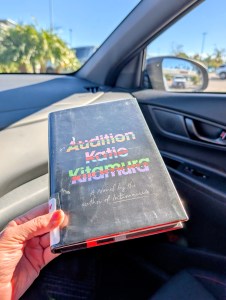
1/11/26 Today, I finished reading the book titled Audition written by Katie Kitamura. This book left me with mixed feelings. Though, it gave me much to ponder, I don’t think I would put it on a “must read” list. I had a difficult time grasping the mother/son relationship and how it transpired over time. It did not quite make sense to me, but I also have to wonder if that was exactly the point. My favorite quote out of the book was as follows:
“Because in fact we don’t want to see the thing itself on a screen or on a stage, we don’t want to see actual pain or suffering or death, but its representation. Our awareness of the performance is what allows us to enjoy the emotion, to creep close to it and breathe in its atmosphere, performance allows this dangerous proximity.”
As a person who has come to enjoy plays at the theater and movies on the big screen, I resonated with the quote and felt that it hit a mark of truth. I have been a witness to narratives with embedded love, heartbreak, defeat, pride, suffering, fear, sadness, anger, isolation, etc…. but never once did I run out of the theater. There is something powerful about narrative proximity and the psychological safety net of performance.
Other themes or ideas that I found to be embedded in this book included the following:
– as we age, our habits/routines may become more ingrained; therefore, we may need to be more intentional to create change or add novelty
– individuals, within the same relationship, may perceive it differently
– children may seek the approval, respect, and/or unconditional love of his/her parents
– are we merely playing a role such as mother/partner/friend because that is what is expected?
– can inviting individuals into our homes bring a sense of newfound joy or humor?
– is it necessary to graduate from college to be successful?
– what boundaries do parents set with their children and vice versa?
– how does acting show up in real life encounters?
– relationships and communication are not always clear or straightforward
– when do we break ties with loved ones and when do we reconcile them?
The book does not answer the questions posed, but rather, it prompts reflection by way of storytelling. Overall, read at your own risk of confusion and relational perplexity.
 Simply Op
Leave a comment